Harold Acton Library

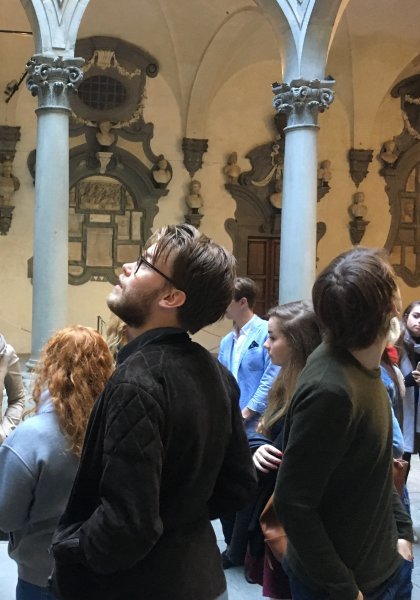
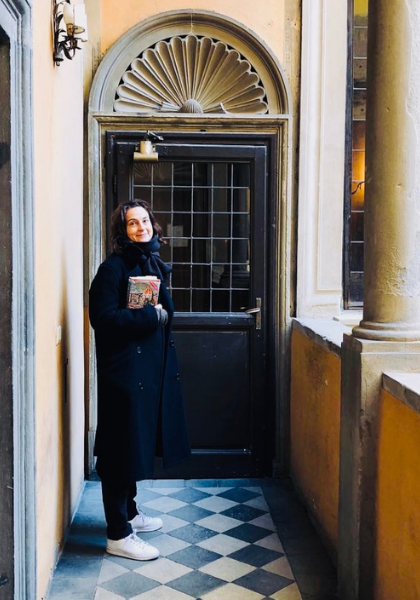
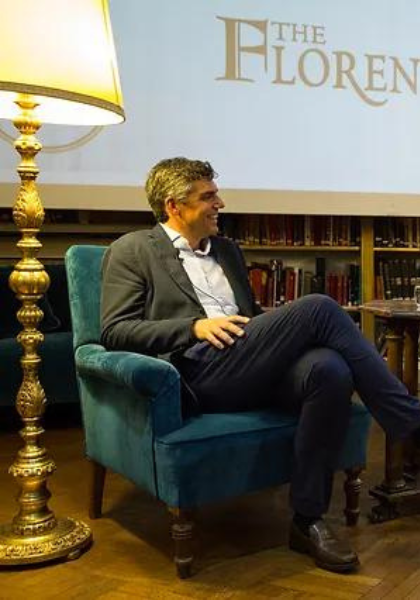
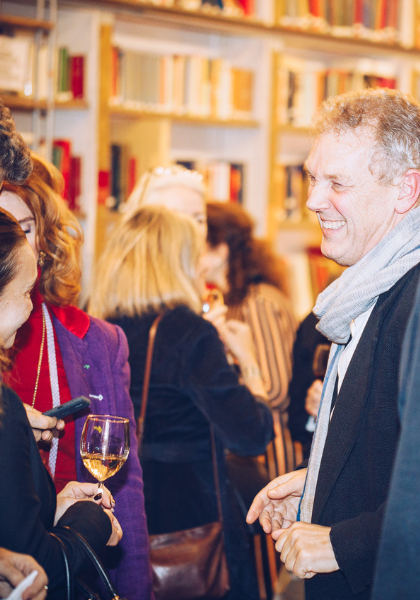
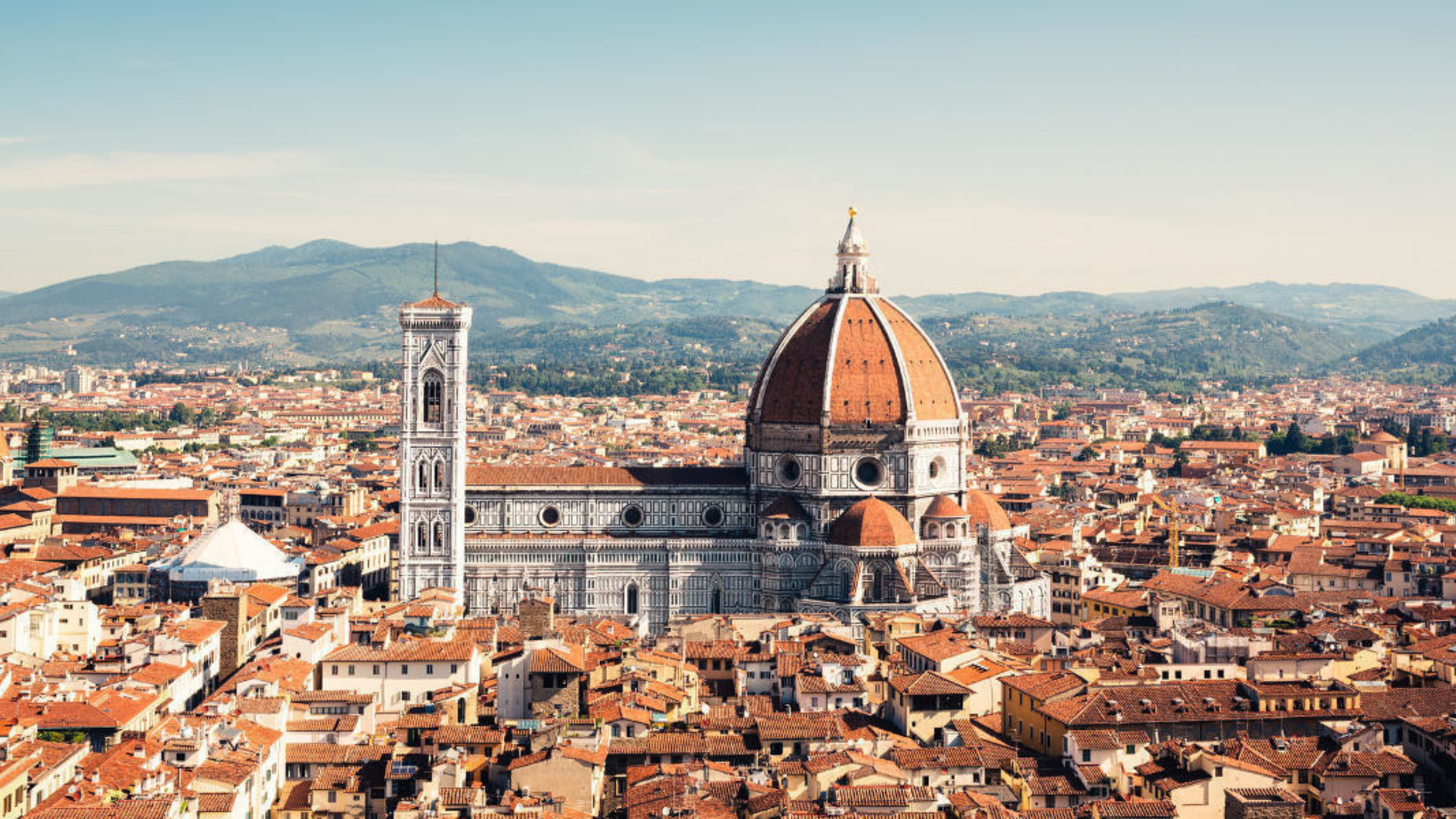
The British Institute and its Library have played an important role in Anglo-Florentine cultural life since 1917.  Today the Harold Acton Library continues to provide a rich resource of books to borrow and browse, and it is also the venue for the British Institute’s stimulating programme of lectures and films.

Membership of the Library is open to all.

Opening hours: Monday to Friday 10.00 to 18.30.

NEW: British Institute of Florence online publication


Download publication:Proceedings of the "Shakespeare and His Contemporaries" Graduate Conference. (PDF)

The British Institute of Florence announces the online publication of the first volume of the Proceedings of the "Shakespeare and His Contemporaries" Graduate Conference. The publication contains selected papers from the conferences 2009-2011.

The British Institute of Florence launched its ‘Shakespeare Graduate Conference' in 2009, with a view to providing an annual platform for young Italian doctoral candidates, and those who had recently earned their doctorates, to present their own contributions to Shakespearean studies before an audience consisting of their peers and professors as well as members of the public.

For the present online publication, papers presented at the first three conferences have been selected by ‘blind review'. The variety of subject, methodology and critical stance apparent in the texts we have chosen is, we believe, a good indication of the range and vitality of Shakespearean studies in Italy today. We hope that this new initiative of publishing the papers of the British Institute conference online will provide useful assistance to participants in their academic careers.

Abstract

The Proceedings of the 'Shakespeare and His Contemporaries' Graduate Conference for the years 2009, 2010 and 2011 are published online by the British Institute of Florence. Thirteen papers presented at the first three conferences have been selected by 'blind review'. The variety of subject, methodology and critical stance in the texts selected is, we believe, indicative of the range and vitality of Shakespearean studies in Italy today.

From 2009 there is Simone Roviga's paper on the 'de-musicalisation' of St Augustine's tempus in Shakespeare's tragedies, which he considers 'a perfect example of a wider cultural change that, during the Renaissance, put an end to an old, traditional way of representing and perceiving the philosophical meaning of time'; and Enrico Scaravelli's account of 'Bardolotry' in Restoration adaptations of Shakespeare, most of them by John Dryden.

Among the papers presented in 2010 are one by Sheila Frodella on the English translations, re-readings and re-writings of Guarini's Pastor fido; and two on the figure of Shylock, one by Chiara Lombardi who compares him with Barabas in Marlowe's The Jew of Malta, and one by Francesca Montanino who discusses Henry Irving's interpretation of the role on the Victorian stage.

From 2011 there is an exploration by Francesco Calanca of the William Ireland forgeries, including an account of the production of Vortigern at Drury Lane in 1796 (when the line I wish this solemn mockery were o'er caused much unseemly mirth); Cesare Catà's interpretation of the courtly rhetoric, and anomalous form, of Romeo and Juliet as Shakespeare's attempt at a Neo-Platonic, Ficinian philosophical synthesis, with Lutheran features; a paper by Elena Intorcia on the 'translation' and staging of Shakespeare in ASL (American sign language), exploring notions of gestuality; one by Domenico Lovascio who discusses Lucan and Machiavelli in relation to Ben Jonson's second Roman tragedy, Catiline his Conspiracy (1611); an examination by Maria Elisa Montironi of Bertolt Brecht's Corialan von Shakespeare bearbeitung (1951) as an 'intercultural (re)writing' of Corialanus; Eleonora Oggiano's paper considers George Gascoigne's contribution to the entertainment put on by the Earl of Leicester for Queen Elizabeth at Kenilworth Castle in July 1575, studying the printed version in conjunction with the anonymously published 'Langham's letter'; a discussion of Measure for Measure in relation to the Authorised Version of the Bible (1611), by Cristina Paravano; and a comparative study of The Tempest and Ludwig Tieck's Naturmärchen (1796-1803), by Simonetta Sagliocca.

Want to donate a book to the Library? Click here.

Who was Harold Acton?

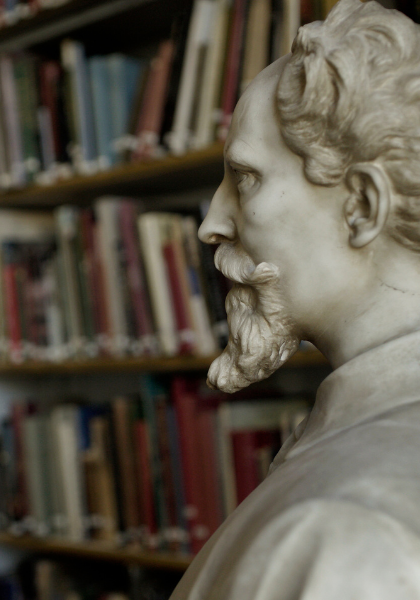
Harold Acton

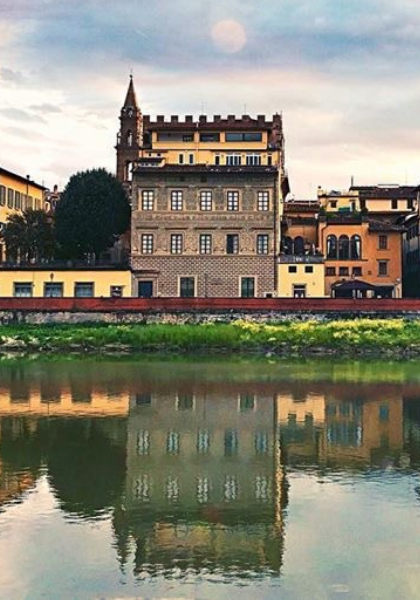
The Library was named after Harold Acton in 1989. Harold was for many years associated with the British Institute; he joined the governing board in 1950 and made available his apartments in the Palazzo Lanfredini for the Library of the British Institute in 1966.

Harold’s father, Arthur Acton, was from the Italian branch of the English Acton family, originally from Shropshire. His mother, Hortense Lenore Mitchell (1871-1962), was a rich heiress from Chicago, whose father was the founder of the Illinois Trust and Savings bank. When Hortense married Arthur in 1903 they moved into the Villa La Pietra, on the via Bolognese in Florence and shortly afterwards she bought it for him.

Harold was born in the Villa La Pietra in 1904, and grew up in the cultured and cosmopolitan Anglo-Florentine society before the First World War. He was sent to Eton and then to Christ Church, Oxford, where he was the most celebrated undergraduate of his generation. His contemporaries included Evelyn Waugh, Graham Greene, Cyril Connolly, Brian Howard.

A book of poems, Aquarium (1923), was published to national acclaim when Harold was only eighteen. Later volumes of poetry were less succesful, and after a failed novel, unfortunately entitled Humdrum (1928), he found his true métier as a writer of historical narrative. The Last Medici, a study of the Grand Dukes Cosimo III and Giangastone, came out in 1932. In that year Harold set out for the Far East, and having toured South-East Asia he settled in Peking (Beijing), where he taught English at the University for seven years. In this period he learned the language and studied the classical Chinese theatre. He made a number of translations from the Chinese and collected works of art, but the political situation both in China and in Europe was rapidly deteriorating, and in 1939 he returned to Europe to fight against Hitler. After a quixotic lecture tour of Italy, hoping to persuade Mussolini’s Fascist government not to declare war on Britain, he joined the Royal Air Force and served in India and Ceylon (Sri Lanka). His parents escaped to Switzerland, and the Villa was sequestered. Harold was in Paris after the Liberation as an intelligence officer, and saw many old friends such as Gertrude Stein, George Orwell and Jean Cocteau. A few years after the war he published Memoirs of an Aesthete (1948), expounding his personal creed of artistic and natural beauty. In the 1950s he spent much time in Naples, where his archival researches eventually bore fruit in the form of two massive historical studies, The Bourbons of Naples (1956) and The Last Bourbons of Naples (1961). After the deaths of his parents he became sole owner of Villa La Pietra, where he spent the rest of his life. A second volume of autobiography, More Memoirs of an Aesthete, came out in 1970. An attractive coffee-table book called Tuscan villas, illustrated with photographs by Alexander Zielcke, appeared in 1973, and two years later Harold published his biography of an old friend, Nancy Mitford: a Memoir. Another old friend, Anne Rosse, was the mother-in-law of Princess Margaret and because of this connection many members of the royal family came to stay as Harold’s guests at La Pietra. He was always generous in allowing visitors to Florence to look round his house and garden.

In February 1994 Harold died in his bed at La Pietra, in the house where he had been born ninety years previously. He is buried beside his parents and younger brother, who died during the Second World War, in the Allori cemetery on the via Senese. He left his portion of the Palazzo Lanfredini, which already housed our library, to the British Institute and the Villa and its surrounding properties to New York University, which now uses La Pietra as its principal European campus.

For more on the history of the British Institute and the Harold Acton Library see Brief History